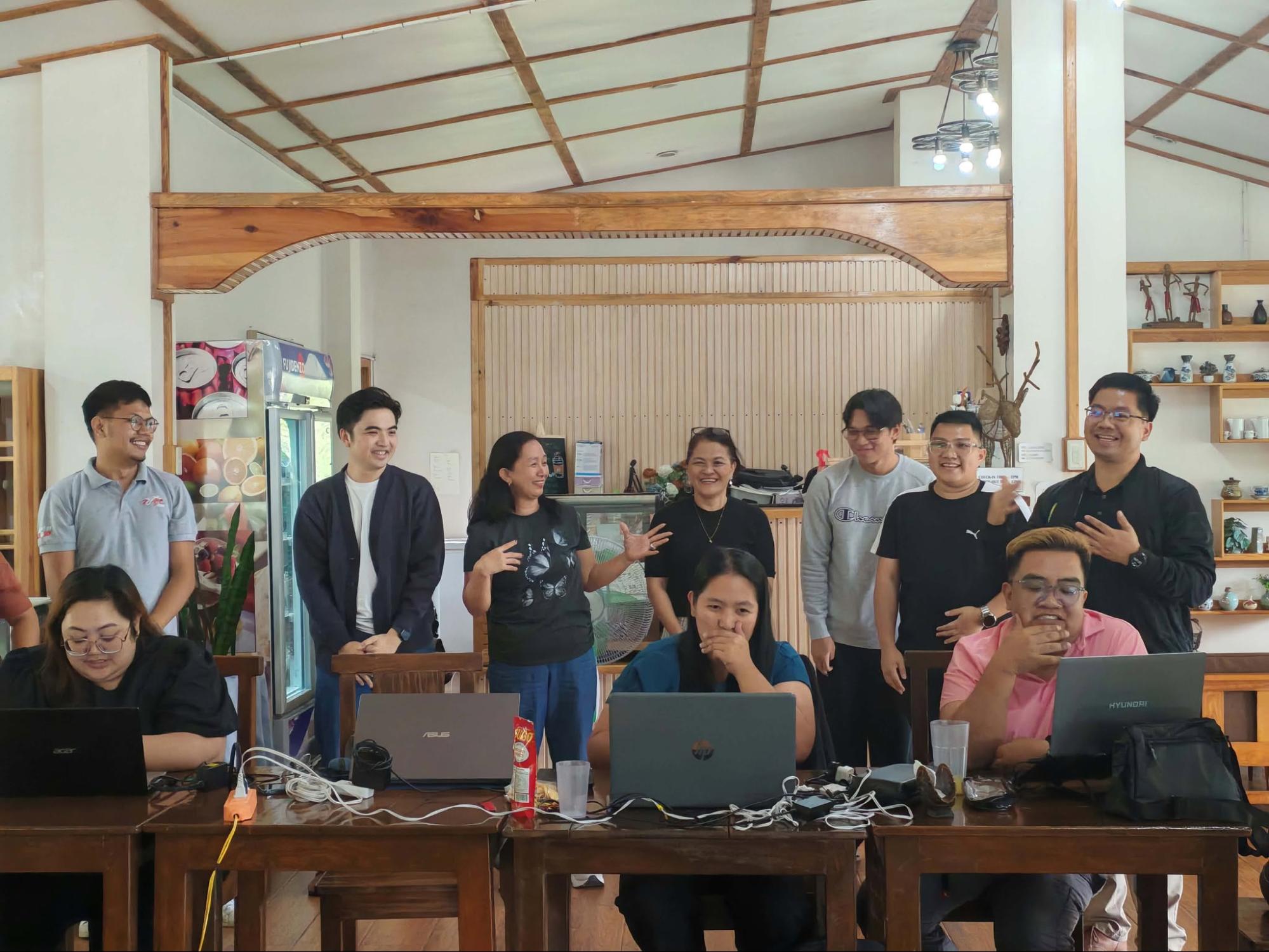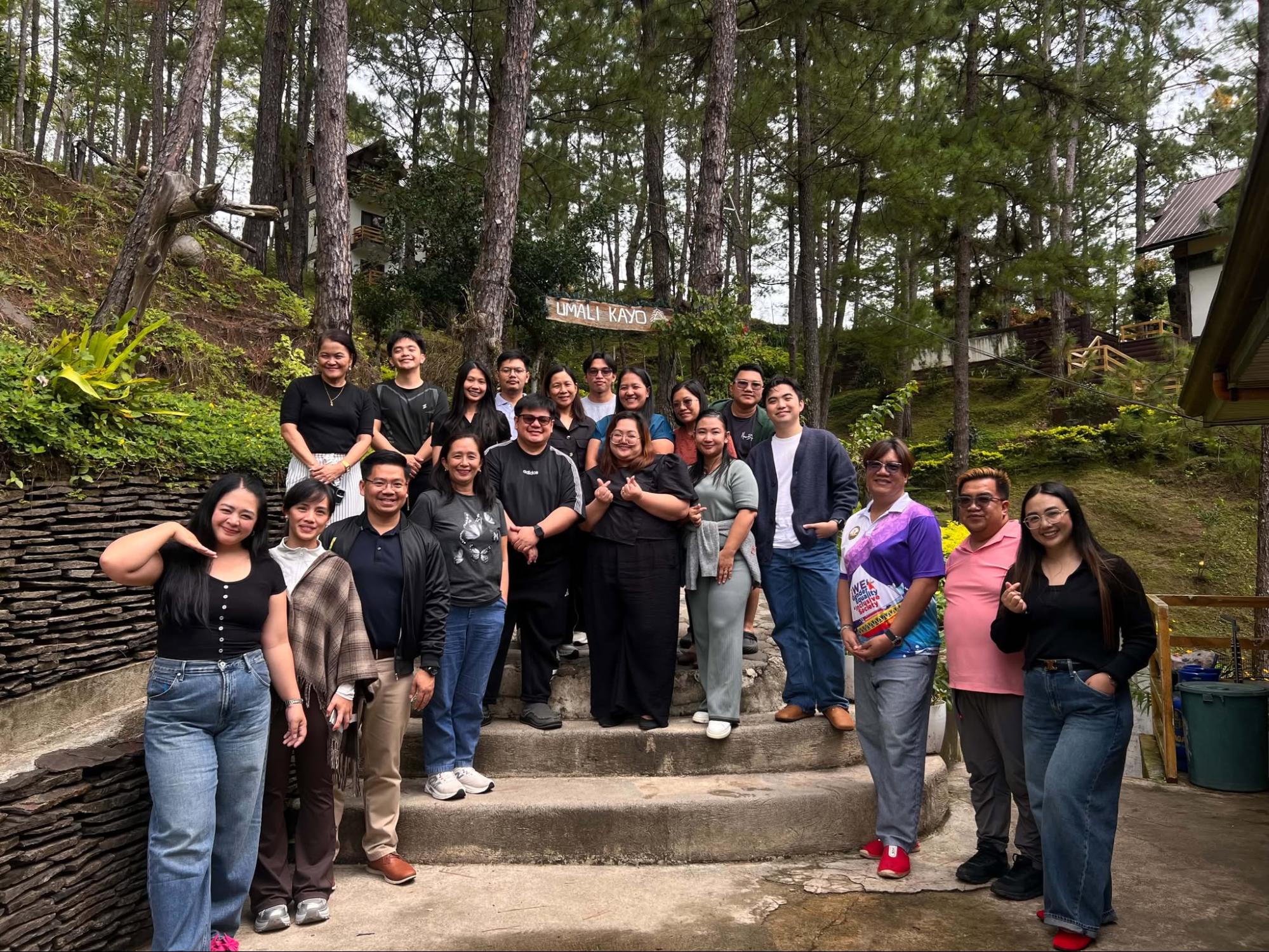
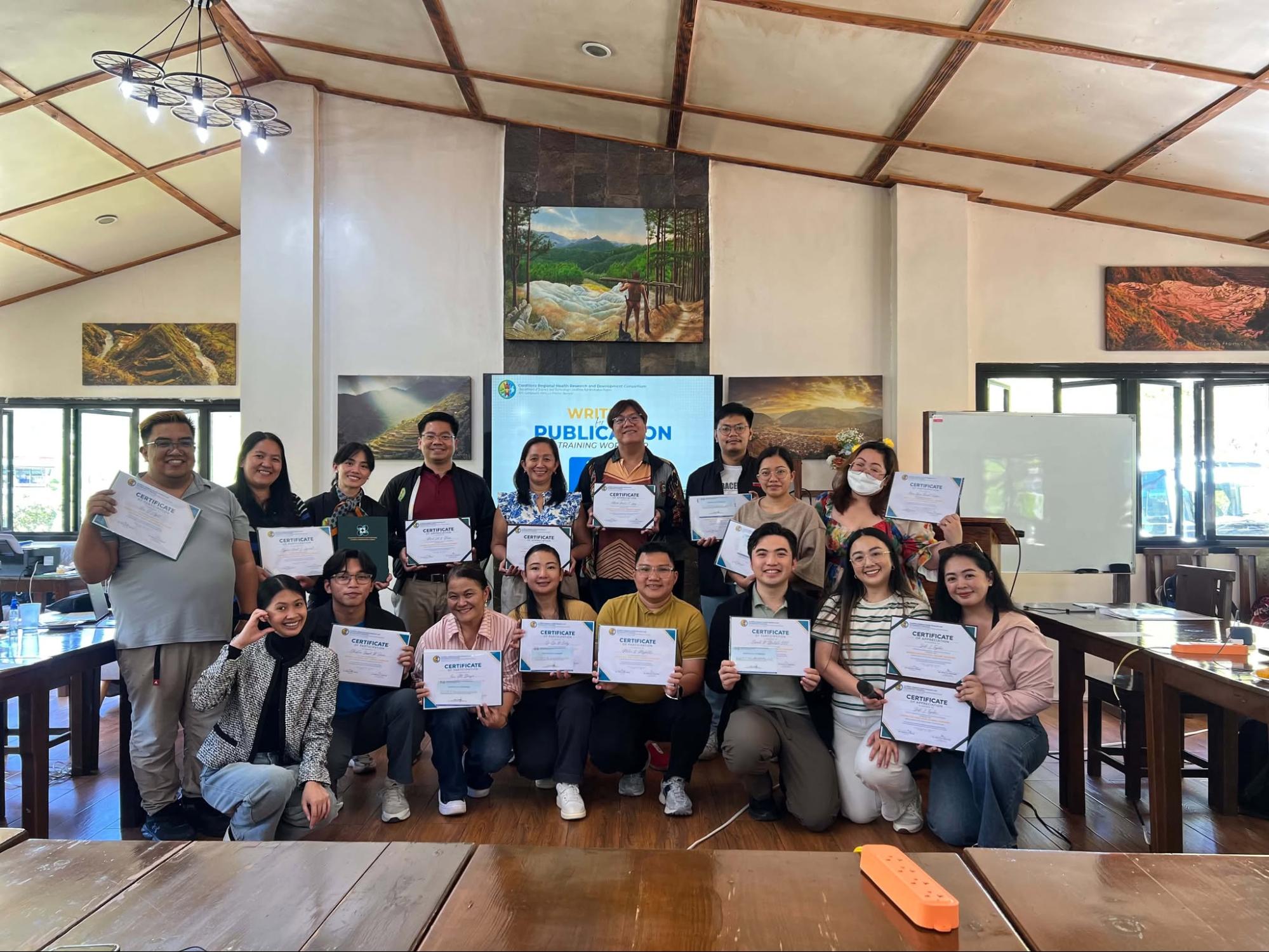
The sessions walked participants through each step of turning a completed study into a published journal article. Dr. Thelma D. Palaoag discussed the use of artificial intelligence in health research. Dr. Jude L. Tayaben, CBC Co-Chair, explained why publishing health research matters and how to reshape a research report into a journal article. Dr. Mark Preston Lopez shared how to choose the right journal, write a strong introduction, and respond to reviewers. Ms. Lilian G. Tumapang focused on presenting methods and results clearly, while Dr. Mark Job Bascos discussed publication ethics and the responsible use of AI. After each session, participants worked on their own manuscripts with guidance from the mentors, including Dr. Stephanie A. Diong-an.
Through the expertise and guidance of the mentors, the participants sharpened their skills in academic writing, from organizing their ideas clearly to presenting their findings in a way that meets the standards of scientific journals. The mentors’ feedback helped the writers see their work from a reviewer’s point of view, strengthen weak areas in their manuscripts, and better understand what it takes to bring a study to publication. Beyond improving individual papers, the experience built the participants’ confidence and capacity to continue writing and publishing research that matters to their institutions and communities.
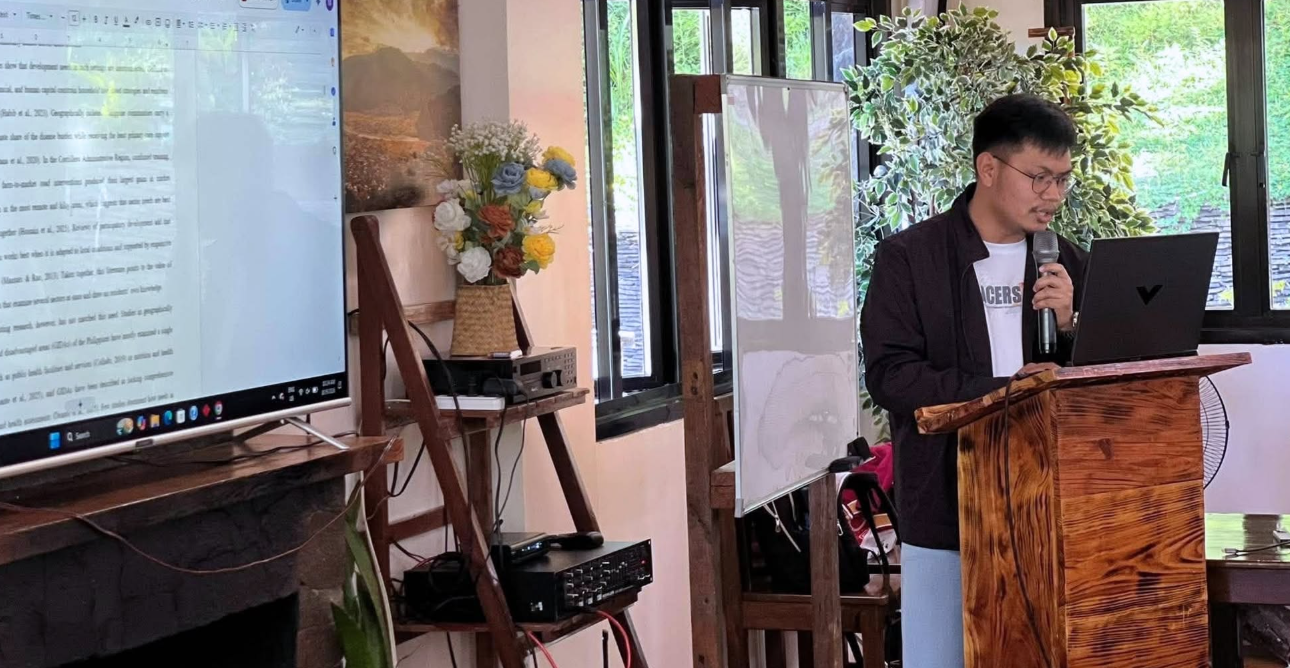
By the end of the workshop, participants had reworked their studies into draft journal articles, revised key parts of their manuscripts, and set clear targets for submission. Each participant also gave a short presentation of their paper to show their progress and how they applied the lessons from the sessions, with the mentors offering final comments for further improvement. In the long term, the workshop is expected to increase the number of health research publications from Cordillera institutions, make local evidence more visible to decision-makers, and strengthen collaboration among consortium members.
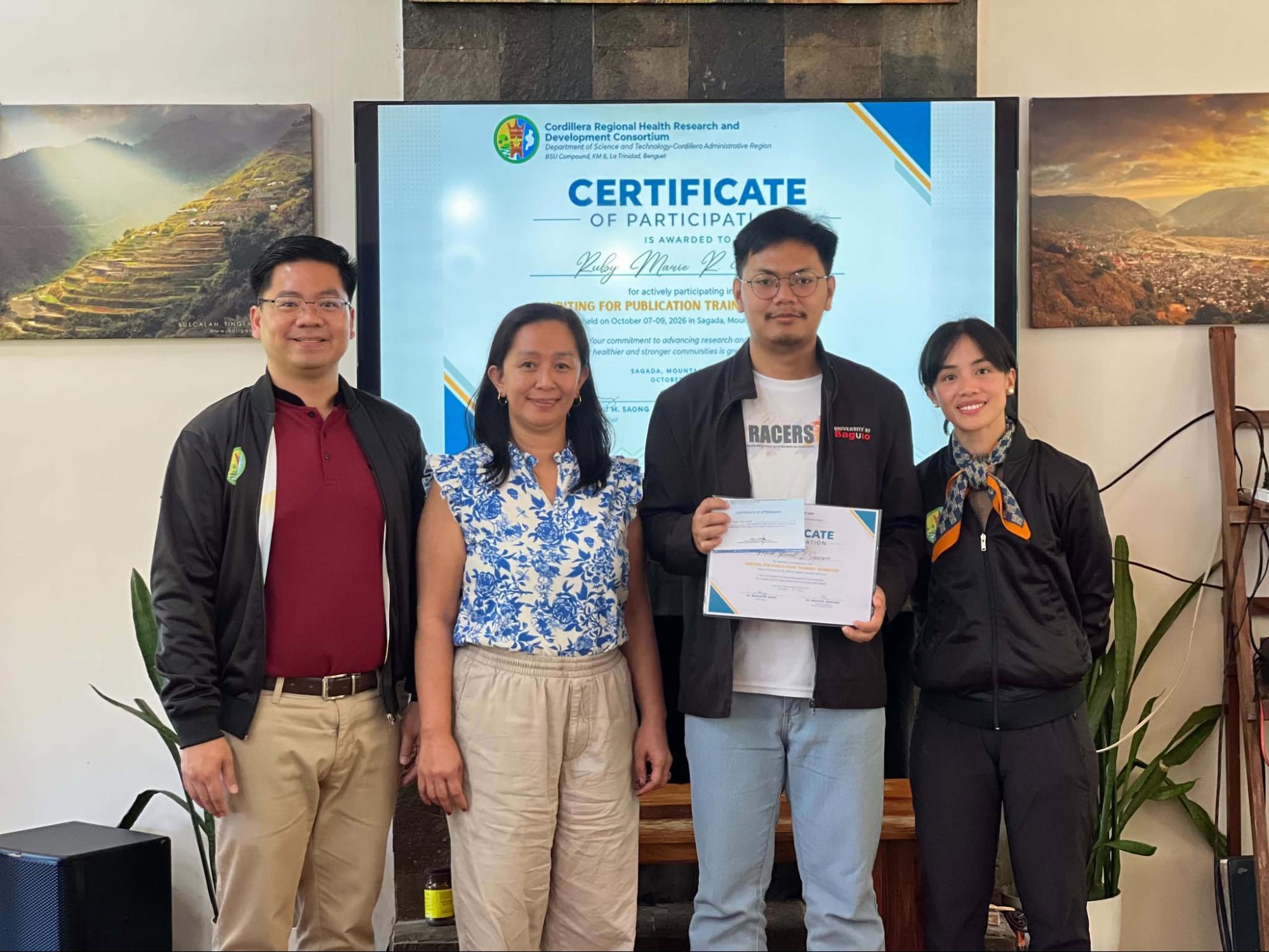
 Among the 12 participants was Mr. Mark Rommel Supsupin of the Research, Innovation, Extension, Community Outreach, and Sustainability (RIECOS) Office of UB, whose study, “Pathways to Community Empowerment: A Comprehensive Needs Assessment Toward Sustainable Development in Barangay Naguey, Atok, Benguet,” was among the manuscripts developed during the workshop. The study assessed the current situation of the barangay in terms of livelihood, literacy, health, and infrastructure; reviewed the programs already in place and the gaps in promoting sustainable development; and identified the priority needs as felt by the residents themselves. From these findings, it proposed a three-year development plan to strengthen community empowerment and resilience. The workshop helped shape the study into a journal-ready article, with the aim of sharing its findings beyond the University and the barangay. Once published, it can add to the growing body of knowledge on community development in the Cordillera and serve as a reference for researchers, local leaders, and partner agencies working in similar communities. More importantly, it can help guide programs and decisions that respond to the real needs of the people of Naguey.
The activity contributes to several Sustainable Development Goals (SDGs). Under SDG 3 (Good Health and Well-being), it supports Target 3.c, which focuses on developing and strengthening the health workforce, as measured by Indicator 3.c.1 (health worker density and distribution). The workshop contributes to this by enhancing the skills of health researchers and practitioners and generating research that can strengthen local health programs. Under SDG 4 (Quality Education), it supports Target 4.3 on access to continuing education and lifelong learning, measured through Indicator 4.3.1 (participation of youth and adults in formal and non-formal education and training), as the workshop serves as a form of non-formal, skills-based training for working professionals. Under SDG 9 (Industry, Innovation and Infrastructure), it contributes to Target 9.5, which aims to enhance scientific research and increase research and development personnel, as measured by Indicator 9.5.2 (researchers per million inhabitants). By training researchers to complete and publish their studies, the workshop helps expand the region’s research workforce. Finally, under SDG 17 (Partnerships for the Goals), it reflects Target 17.17, which promotes effective partnerships among public institutions and civil society, as shown by the consortium members’ collaboration in pooling their expertise and resources to conduct the workshop.
For the University of Baguio, the workshop marks another significant step in strengthening its culture of research, innovation, and scholarly publication among faculty members and researchers. With the guidance of the mentors, UB participants refined their manuscripts and developed concrete plans for publication, adding to the University’s growing portfolio of research outputs. Through the RIECOS Office, the University remains committed to empowering its researchers to share knowledge, contribute to evidence-based practice, and produce research that addresses the health needs and development priorities of the Cordillera region.