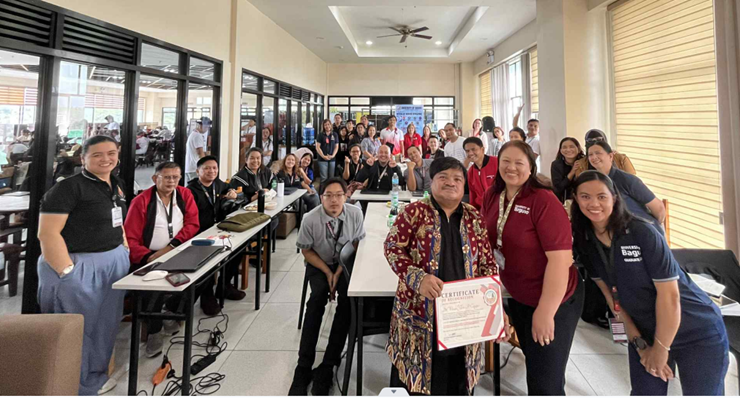

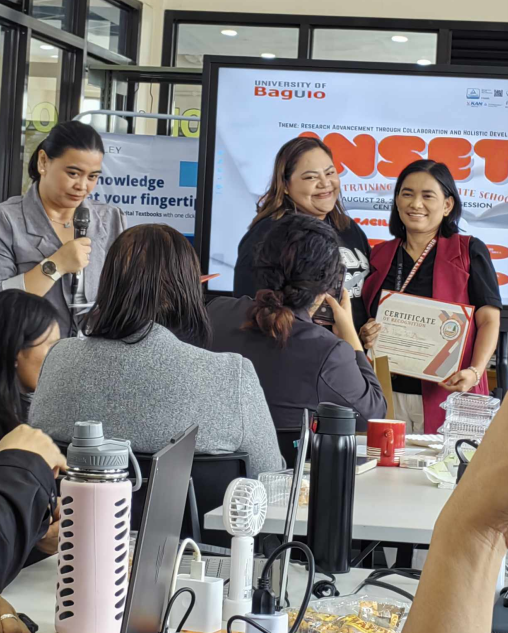
As part of the REACH Project (Research Education Advancement through Collaboration and Holistic Development), the Graduate School in partnership with the Research Innovation Extension and Community Outreach (RIECO) conducted a two-day, four-part In-Service Training (INSET) on August 28–29, 2025 at the Centennial Library. The program brought together faculty members, preceptors, and research evaluators to enhance their competencies, deepen methodological expertise, and strengthen a culture of collaboration and scholarly depth.
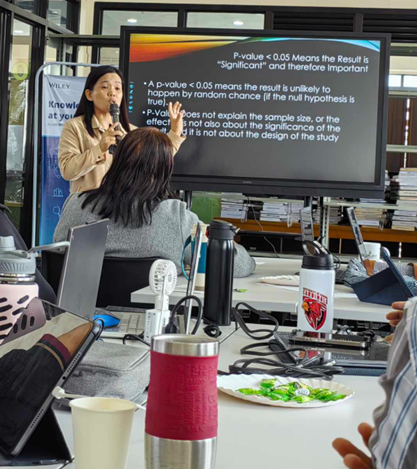
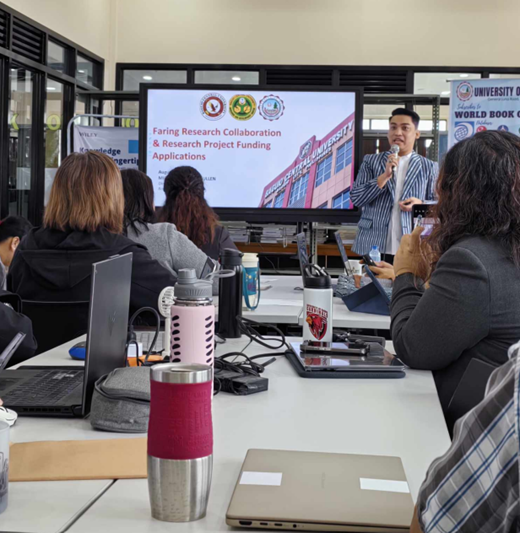
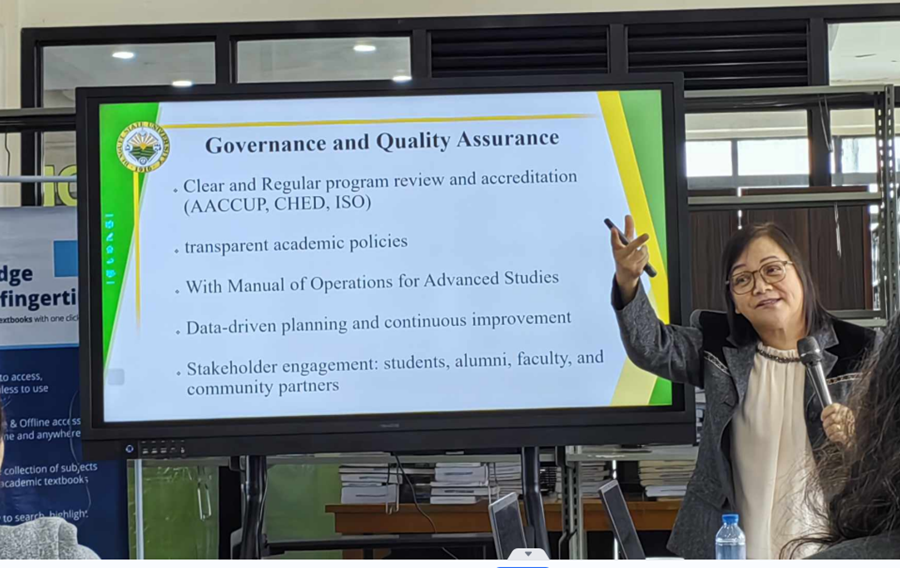 The opening sessions featured Dr. Imelda G. Parcasio of Benguet State University, who presented institutional best practices anchored on academic excellence, inclusivity, and governance; Dr. Michael Tomas Sebullen of Baguio Central University, who discussed strategies for securing government research grants through networking Qand collaboration; Dr. Vilma Deponio of the University of Baguio, who emphasized the value of mentoring in unlocking student potential; and Dr. Easter Balandres of Urdaneta City University, who dispelled common misconceptions in statistical research. These discussions highlighted the need for balanced institutional practices, sound methodological judgment, and strong mentorship.
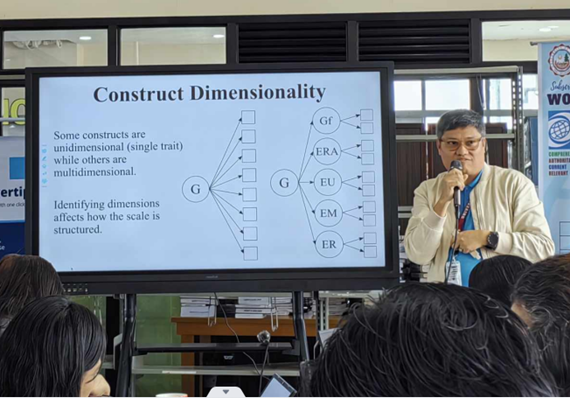 The second phase was led by Mr. Miguel Xercex Villacrusis, who presented the systematic steps in scale development, stressing expert validation, Exploratory Factor Analysis (EFA), and Confirmatory Factor Analysis (CFA). He underscored that scholarly depth, not shortcuts, ensures the reliability of research instruments.
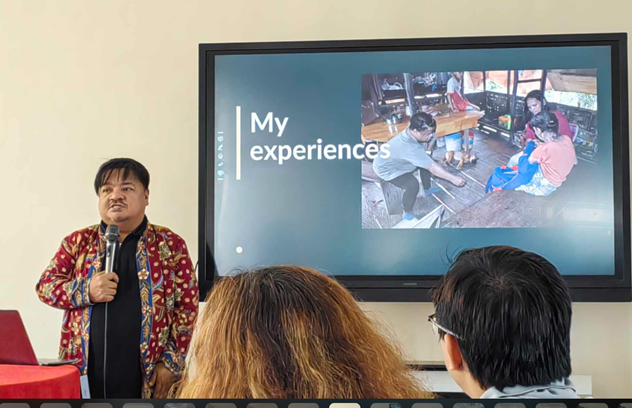
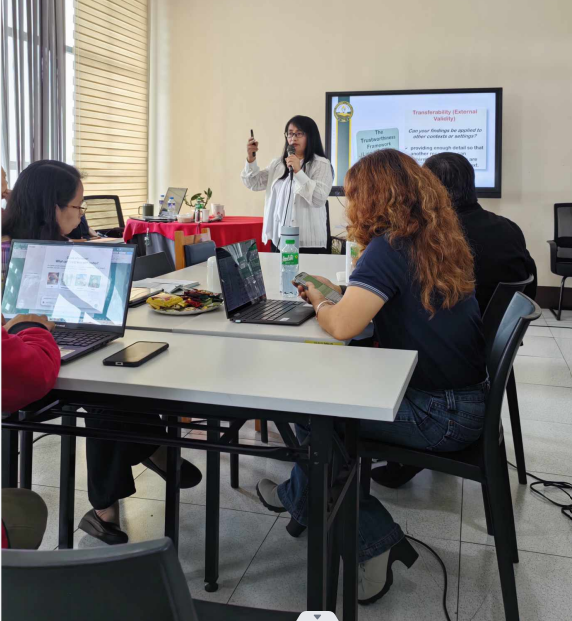
On the second day, Dr. Wendell Glenn P. Cagape of Centro Escolar University provided an in-depth lecture on ethnographic approaches, emphasizing immersion, reflexivity, and sensitivity to community contexts as cornerstones of credible qualitative research. In the afternoon, Dr. Rhoda Basco-Galangco of Mountain Province State University delivered insights on qualitative instrument validation, stressing piloting, triangulation, and expert feedback to safeguard credibility and dependability.
The INSET aligned closely with the United Nations Sustainable Development Goals (SDGs): advancing SDG 4 (Quality Education) through faculty development, promoting SDG 9 (Industry, Innovation, and Infrastructure) through research collaboration, and supporting SDG 16 (Peace, Justice, and Strong Institutions) through ethical and credible practices.