“an empowered civil society ensures accountability, responsiveness, and shared responsibility in our communities”
- Michelle Ann P. Chomayag
- 11/25/2025
- 11:24 am
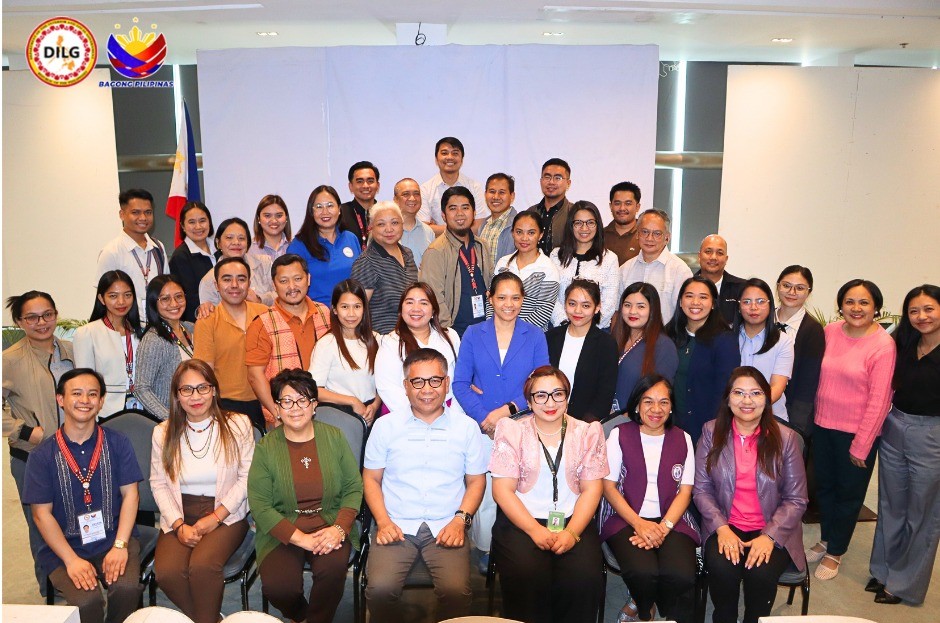
“Strengthening CSOs is strengthening governance itself, because an empowered civil society ensures accountability, responsiveness, and shared responsibility in our communities,” affirmed ARD Ruperto B. Maribbay Jr. His words resonated deeply throughout the CivicAdemy Training of Trainers (TOT) organized by DILG–CAR from November 24 to 26, 2025. This message became the heartbeat of the three-day training, an activity that not only elevated civil society engagement in local governance but also reaffirmed the country’s commitment to building inclusive, transparent, and effective institutions in line with global development goals.
Anchored on the DILG Strategic Plan 2023–2028 and aligned with the 6th PH-OGP National Action Plan, the TOT aimed to strengthen the capabilities of CSO leaders and local resource institutions while cultivating a shared vision of partnership, integrity, and participatory development. Participants immersed themselves in the CivicAdemy curriculum and carefully refined their delivery of modules such as values formation, organizational leadership, development planning, communication, negotiation, project management, and policy engagement. By enhancing the leadership and technical competencies of CSOs, the activity contributed to building more accountable and responsive institutions—embodying the principles of SDG 16 (Peace, Justice, and Strong Institutions). It also promoted inclusive participation, which is central to SDG 10 (Reduced Inequalities).
From the outset, the training fostered a supportive and collaborative learning environment. It opened with an orientation, acknowledgments, and a levelling-off session that helped participants build shared expectations. This was followed by focused module preparation sessions, ensuring alignment in training methodologies and approaches. Such structured, intentional, and empowering learning processes mirror the essence of SDG 4 (Quality Education), which emphasizes the importance of accessible, high-quality, and transformative learning opportunities.
The University of Baguio, through its Research, Innovation, and Extension and Community Outreach (RIECO) Office and the School of Teacher Education and Liberal Arts (STELA), demonstrated a strong institutional commitment to these development goals. Dr. Donnavila Marie Panday-Herbster, RIECO Director, and Ms. Michelle Ann Chomayag, RIECO staff, actively participated in the in-depth training sessions, broadening their understanding of the CivicAdemy’s core modules. They were joined by Ms. Marianne Basoyang, Program Chair of the Bachelor of Arts in Political Science, and faculty member Ms. Jenny Agtani, whose academic insights enriched the discussions. Notably, both Ms. Basoyang and Ms. Agtani previously served as module developers for the CivicAdemy, co-authoring a learning module on Communication and Branding. Their involvement highlighted the powerful synergy between academe, government, and civil society, an embodiment of SDG 17 (Partnership for the Goals).
During the training sessions, trainers facilitated intensive run-throughs of modules covering values formation, organizational leadership, development planning, local budgeting, and local legislation. These discussions not only clarified how governance systems function but also emphasized how communities can meaningfully take part in planning and decision-making. For the University of Baguio, these learning experiences serve as important avenues for strengthening its commitment to community engagement through its several plans, especially as it seeks to extend its expertise and future outreach initiatives to the community of Atok, Benguet. UB envisions empowering Atok by strengthening local leadership, amplifying community voices, and nurturing self-reliant initiatives. Its future engagements in Atok will be guided by shared aspirations and deeper civic participation which is closely aligned with the vision and spirit of the CivicAdemy. After all, effective governance thrives not through isolated efforts, but through collective action grounded in trust, and genuine empowerment.
As the CivicAdemy Training of Trainers concluded, one message remained clear: strengthening civil society is not a one-time undertaking, it is a continuous commitment to building a governance environment where every voice matters, every organization is capable, and every community plays an active role in shaping its future. Participants now move forward not only with enhanced skills and modules, but with a renewed sense of purpose, proving that when the community is empowered, institutions grow stronger, and development becomes truly transformative.